Image


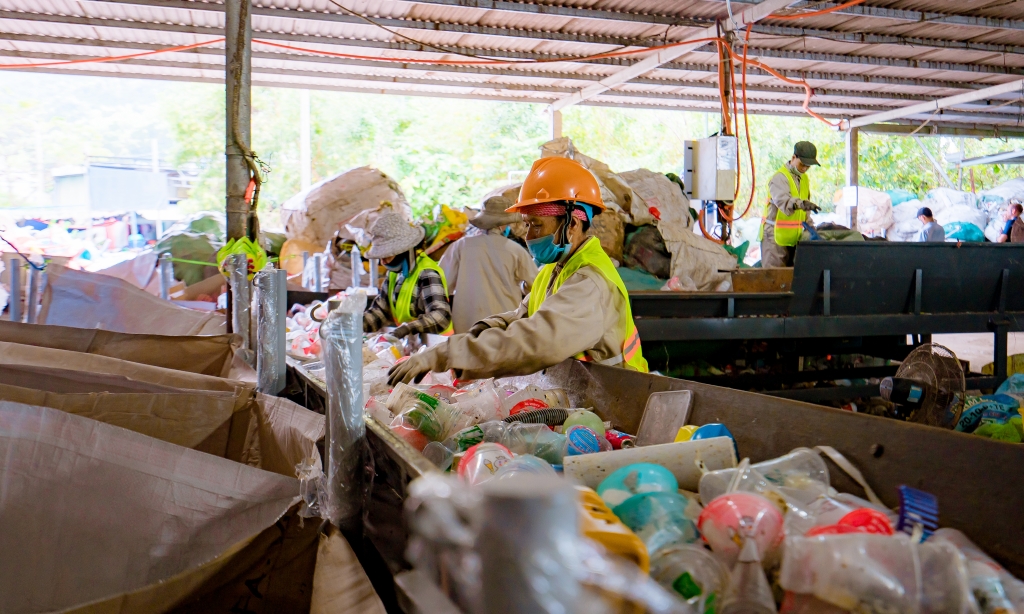
It’s a mismatch with dire consequences: Every day, more than 700 million people worldwide go to bed hungry, even as households waste more than a billion meals.
Addressing these two related problems is often seen as the work of nonprofits, far removed from the corporate world. But what if a nonprofit could help resolve the hunger-food waste gap while also generating economic value for the corporate world?
One Italian nonprofit is doing exactly that. By studying its operational model — and its use of technology to connect those who need food with those who produce or discard it — a research team at the University of Virginia Darden School of Business found that economic and social value are not mutually exclusive. The profit motive, it turns out, is not the only driver of economic value.
It’s a notion that upends the assumption that companies are the only organizations able to create economic value. But distinguishing nonprofit and for-profit organizations in this way, argues the Darden team, is fundamentally flawed.
The U.S. nonprofit sector includes more than 2 million organizations, with collective revenues of $2.4 trillion in 2019. Yet many people still assume nonprofits generate only social value. This research pushes back.
“There are many social problems where creating economic value is possible — and food waste is just one,” says Prem Menghwar, a postdoctoral research associate at Darden and co-author of “The Unsung Role of Nonprofit Organizations in Creating Economic and Social Value: A Stakeholder Theory Perspective,” with Darden Professor Ed Freeman and Antonio Daood from LUISS Guido Carli University.
The research, which is published in Business & Society, explains how nonprofits create economic value for corporations while simultaneously focusing on social value.
To make their case, the researchers spent eight years studying the Associazione Banco Alimentare Roma (ABAR), an Italian food bank founded in December 1990 by 17 volunteers. ABAR collects and distributes food to charities across Rome and the Lazio region.
About two-thirds of its supply comes from AgEA, a food-aid agency within the Italian Ministry of Agriculture. The remaining third is food that is no longer saleable but still edible. This food is donated by supermarkets, grocery stores and food producers that would otherwise be forced to dispose of it, incurring costs and landfill taxes.
To help companies avoid this while feeding people in need, ABAR facilitates food donations at scale. Between 2016 and 2023, it handles roughly 180 tons of daily food surplus, including almost 117 tons of fresh food — a category that is especially hard to donate because of its limited shelf life.
Technology Oils the Wheels
ABAR’s ability to handle such large volumes is thanks to its use of a powerful tool: a digital platform. Using the platform, a food business (whether a producer, packager, processor, or distributor) can notify charities in its area that surplus food is available for donation. A charity, also using the platform, accepts the donation, collects the food from the company facility, and distributes it at its own premises.
The researchers describe this as “tech-resonance capabilities” — using technology to connect the dots between different stakeholders and between food surplus and unmet needs, tech-resonance capabilities can make it possible to convert a negative externality (waste and its associated environmental and financial costs) into economic and social value.
For businesses, it creates an opportunity to support a community cause while reducing the tax they pay on waste (the platform’s data makes it easy for businesses to track and report on this reduction). Meanwhile, they cut the cost of disposing of food surpluses — cost that because of safety concerns can be significant. Meat that has passed its sell-by date, for example, must be disposed of as special waste.
For charities, the benefit is that they are able to identify the food donations available in their area while solving another food redistribution challenge, particularly when it comes to perishable food: the need for speed. Cooked meals, for example, must reach their destination within 60 minutes. Being able to see the available donations in real time means charities can offer more fresh produce to their beneficiary communities.
For ABAR, the model makes it possible to fulfil two parts of its mission: to provide food to needy people — and in a way that is environmentally sustainable.
“The platform extends the reach of our principles to both frontline charities and grocery stores, helping them find a common ground between their need to help people and not to waste, respectively,” one of the nonprofit’s board members told the researchers.
The Food Bank as a Bridge
ABAR’s model is about more than technology. It is about reimagining the process through which food banks make their distributions.
Rather than engaging in the business of food redistribution, ABAR is using a digital platform and the provision of logistics training to frontline charities so that it can act as a bridge between surplus and need.
This decentralized, collaborative approach makes ABAR a matchmaker between donor and beneficiary. It is not deciding what food to collect or where to distribute it. Instead it is using technology to allow local charities and businesses to connect with each other for mutual benefit. Adding to the efficiency, once a charity has accepted a donation, it confirms the transaction online, which removes it from the platform to avoid double booking.
“ABAR is an orchestrator,” says Menghwar. “Technology has reduced the cost and helped both organizations to easily communicate with each other.”
Benefits Flowing in All Directions
The study reframes how we think about nonprofits and for-profits. Previous research has often assumed that for-profits are the only drivers of economic value, while nonprofits contribute social value. But what is clear from the study of ABAR is that nonprofits are active participants in the creation of economic value. Their purpose, of course, is not to generate financial returns but to harness efficiency mechanisms that will drive both social and economic impact at scale, making their model more sustainable for the long term.
“The classic school of thought argues that nonprofits are high purpose but inefficient,” says Freeman, who has taught stakeholder theory and ethics at Darden since 1987.
“In this paper, we have outlined how nonprofits can be efficient while focused on their higher purpose.”
For Freeman, who is credited with articulating the original stakeholder tenets in a business context in his 1984 book “Strategic Management: A Stakeholder Approach,” nonprofits and for-profit entities are in fact united in their need for both higher purpose and efficiency.
And this research demonstrates, philanthropy is not a one-way street but a far more complex network of relationships — one that, with the right partnerships and technologies, enables economic and social benefits to flow in many directions.
Prem S. Menghwar is co-author of “The Unsung Role of Nonprofit Organizations in Creating Economic and Social Value: A Stakeholder Theory Perspective,” with Antonio Daood and R. Edward Freeman, published in Business & Society (2026).